I felt fine. I thought it was just a cough
Until 2017 I led a full and active life. I devoted many years to education, to work and to my family.
Around a trip to Morocco I began to suffer from a persistent cough. At first there seemed no particular cause for concern, but when the cough didn't pass, I went for medical tests.
A CT scan showed that I had pulmonary fibrosis, a disease that scars the lung tissue and can gradually impair lung function and the ability to breathe.
But in those days I found it hard to grasp how serious the diagnosis was.
The doctor recommended starting drug treatment, but I hoped the cough would pass and life would go on as usual. The gap between how I felt and the severity of the disease the doctors were describing was wide.
When I did start treatment, I had to cope with another difficulty: the side effects were significant, until the doctors had to lower the dose so that I could keep taking the medication.
But the disease didn't stop.
"I felt fine. I worked full time. I thought it was just a cough."
When the world begins to shrink
Gradually, what had once been simple became complicated. Breathing grew harder, and the disease began to affect my ability to keep up the routine I knew.
In 2022 I already needed an oxygen concentrator, and later my dependence on oxygen grew until it became total.
For a man used to working, teaching and being active and independent, this was an enormous change. Everyday actions demanded more and more effort, and every trip out of the house required preparation.
Pulmonary fibrosis is a disease whose progression you don't always feel sharply. Only in hindsight did I understand how much had changed along the way, how many abilities that were once natural had become challenges, and how much room the disease had taken in my life.
As the decline continued, it became clear that the one option that might save my life was a lung transplant. I was placed on the waiting list, and my family, seeing my condition worsen, began looking into treatment and transplant options abroad as well.
The wait lasted long months. Alongside the hope of receiving suitable lungs, there was the constant uncertainty of whether the chance would come in time.
Two phone calls and one chance at life
At the end of October 2024 the phone call I had been waiting for finally came: suitable lungs had been found for a transplant.
I arrived at Beilinson Hospital and began the preparations for surgery. After a long wait, it seemed the moment we had all been hoping for had arrived.
But at the last moment it turned out that the lungs were not suitable for transplant. The surgery was cancelled, and my family and I had to go home and keep waiting.
About a week later another call came. This time the transplant went ahead.
The lungs transplanted into my body were those of Master Sergeant (res.) Yedidya Bloch, 31, from Mevo Horon, who was mortally wounded in battle in southern Lebanon and died of his wounds. Yedidya left behind his wife Sapir, who was pregnant at the time, his parents, his brothers and a loving family.
In the hardest moments after his death, his family chose to donate his organs. That decision saved the lives of six people. I am one of them.
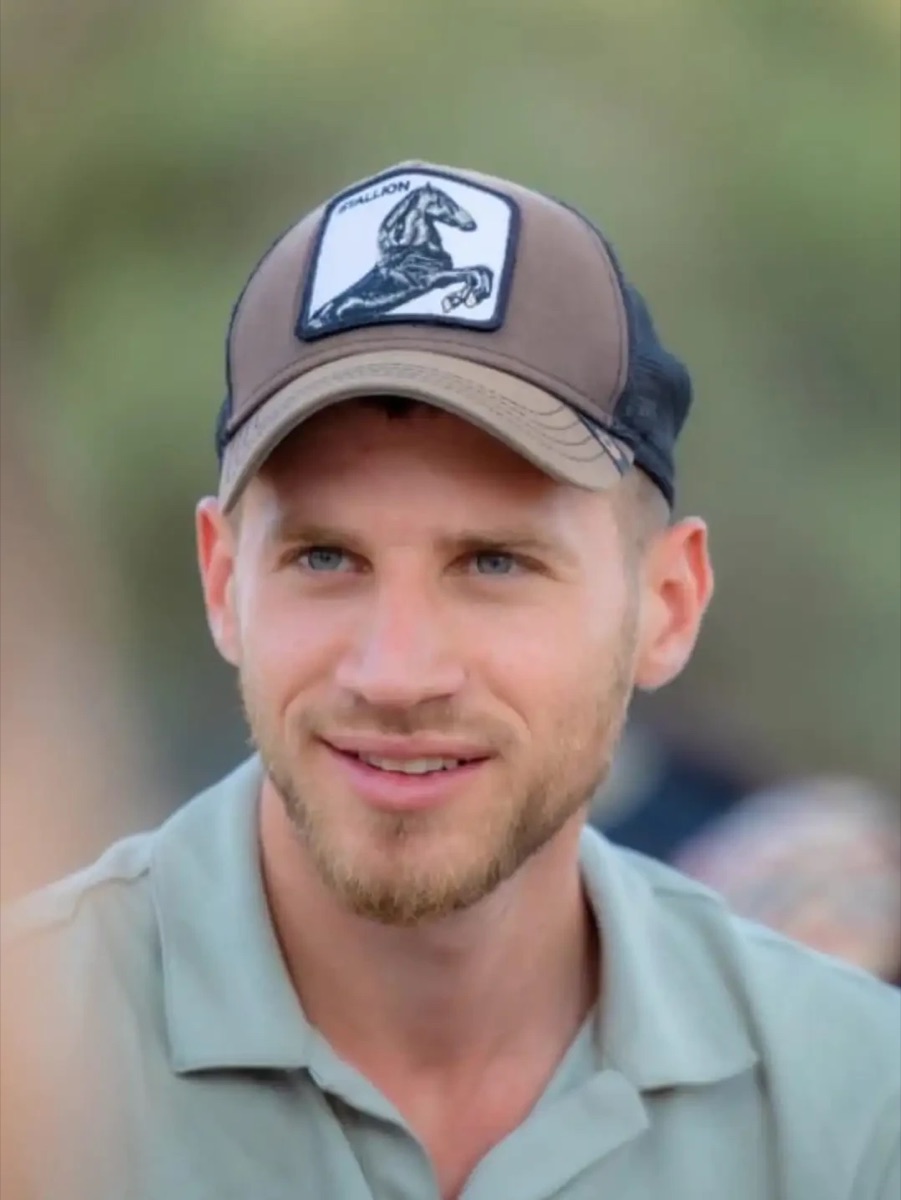
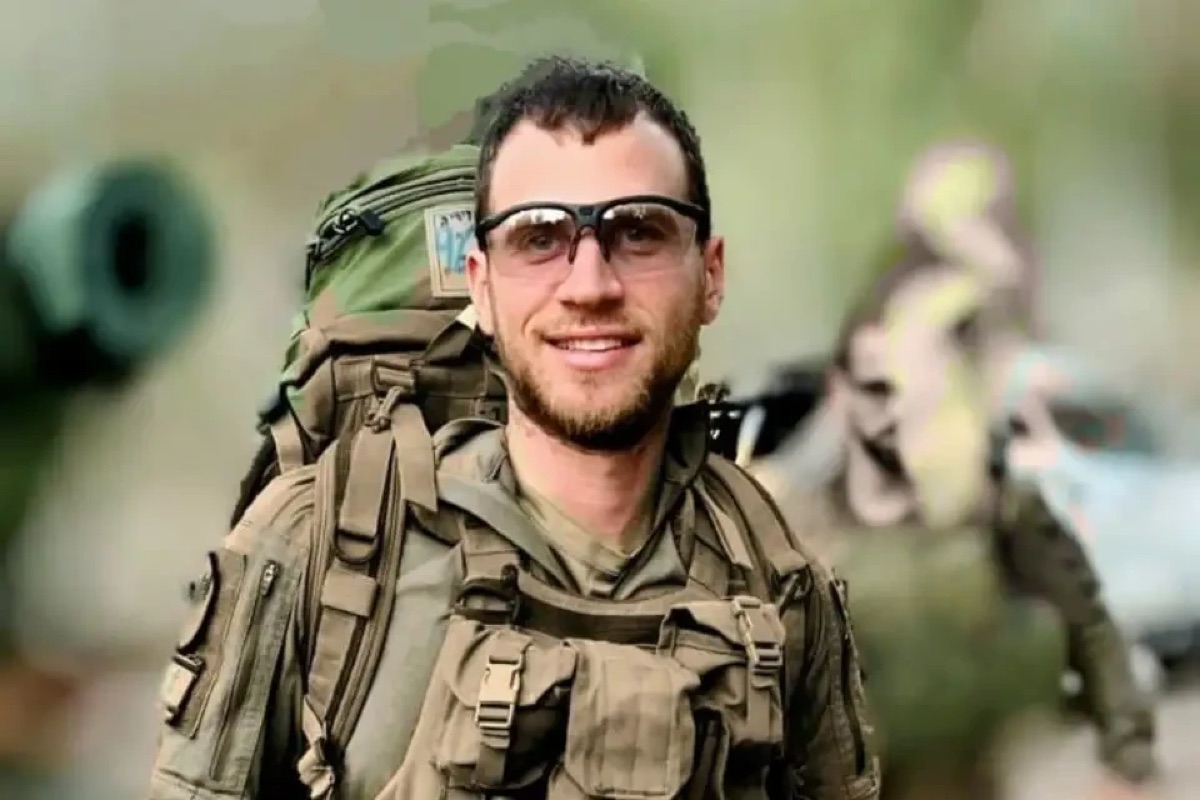
"I started to breathe. I came back to life."
A bond born of loss and hope
After years of struggling to breathe, of depending on oxygen and of a life that grew ever more limited, I could breathe on my own again.
But the chance of a new life came with a knowledge I could not ignore: behind the lungs I received stand a young man who lost his life and a family carrying a heavy loss.
Since the transplant a close personal bond has formed between me and the Bloch family. An extraordinary bond between a Druze family from the Galilee and a Jewish family from Mevo Horon, tied to one another by a single tragedy and an extraordinary human decision.
Knowing who the person was thanks to whom I breathe gives deep meaning to my new life. I see the donation not only as a personal gift, but as an act of mutual responsibility and love of humankind.
"I will take care of these lungs, and I hope they will take care of me."
Five kilometres of gratitude
When the chance came to take part in the Dead Sea Marathon together with other lung transplant recipients, I chose to dedicate the five-kilometre run to Yedidya's memory.
Only a few years earlier I had struggled to get by without oxygen. Now I was running in memory of the man who gave me the chance to breathe again.
During the event I encouraged people to sign an ADI organ donor card. For me, organ donation is no longer an abstract idea or something you hear about in the news. It is the difference between a life of ever-growing dependence on oxygen and the chance to enjoy life again, with family and the simplest things.
"Thanks to them I am alive. I am grateful."
Fibrosis is a disease that doesn't wait
Today, almost two years after the transplant, I look at the road I travelled and want to pass on a message to anyone diagnosed with pulmonary fibrosis.
I remember well the days when I still felt healthy, the difficulty of believing the diagnosis, coping with the side effects and the decline that followed. From my own experience I know how important it is not to ignore the disease, even when the symptoms still seem mild.
Listen to your doctors, stay under regular follow-up, don't give up on treatment because of the difficulties, and tell the care team when side effects make it hard to keep going.
"Fibrosis is a disease that doesn't wait. Don't put off treatment. Keep going, even when it's hard. Do pulmonary rehabilitation, stay under follow-up, and don't lose hope."
My hope
Alongside what I learned from my own experience, I also carry a worry and a hope very close to my heart: my sister is living with pulmonary fibrosis too.
I know the reality she is going through up close, and I hope that her path, and that of other patients, will be different from the one I had to walk.
Research into pulmonary fibrosis is advancing, and new treatments are being developed with the aim of slowing the disease and improving patients' quality of life. I hope that progress will allow more people in the future to live with the disease for many years, with fewer side effects, more independence and fewer limitations.
My hope is that my sister and many other patients will not have to reach the state I was in, and will be able to go on living full lives alongside the disease.
I was given a second chance to breathe. Today I ask that others, too, have the chance to protect their breath, their independence and the life they love.
"Today I know how important it is to recognise the disease, to treat it in time and not to give up hope."
— Labib Salah