When the lungs were damaged
Over the years my lungs became involved: pulmonary fibrosis, a typical and one of the most dangerous manifestations of scleroderma. My lungs began to lose function, the shortness of breath grew, and simple everyday activities became an effort.
The treatment that couldn't help
In those years the treatment options for pulmonary fibrosis were limited. Only at an advanced stage of the disease did I receive anti-fibrotic treatment, under a compassionate-use program.
The side effects were so severe that instead of letting me live, they turned everyday life into a struggle. In the end the treatment was stopped. It could not give me the benefit we had hoped for.
My doctors closely monitored the deterioration, and at some point came the moment I had feared: lung transplant was the only way forward. I had no choice — I needed to decide whether to enter the waiting list.
The decision was difficult. I was the mother of a small child, I knew how complex and dangerous the procedure was. But I also knew that without the transplant, I had no future.
"But I had something that held me — my child, my husband, the family that stood by me every moment."
The waiting
The period of waiting for a suitable lung was one of the hardest things I've ever experienced. You don't know when, you don't know if you'll see it. Every day connected to oxygen, every day with absolute uncertainty.
But I had something that held me — my child, my husband, the family that stood by me every moment. They were the reason to get up in the morning, the reason to keep going.
In September 2019 the phone rang. A suitable lung had been found.
The transplant and the new life
The transplant — a single lung — was successful. Recovery was long and challenging, but after weeks of rehabilitation, I did something I hadn't done in years: I took a deep breath.
The first "real" breath after the transplant — it's a moment I'll never forget. Just to breathe, without effort, without pain. In that moment I realized how much I had taken that breath for granted.
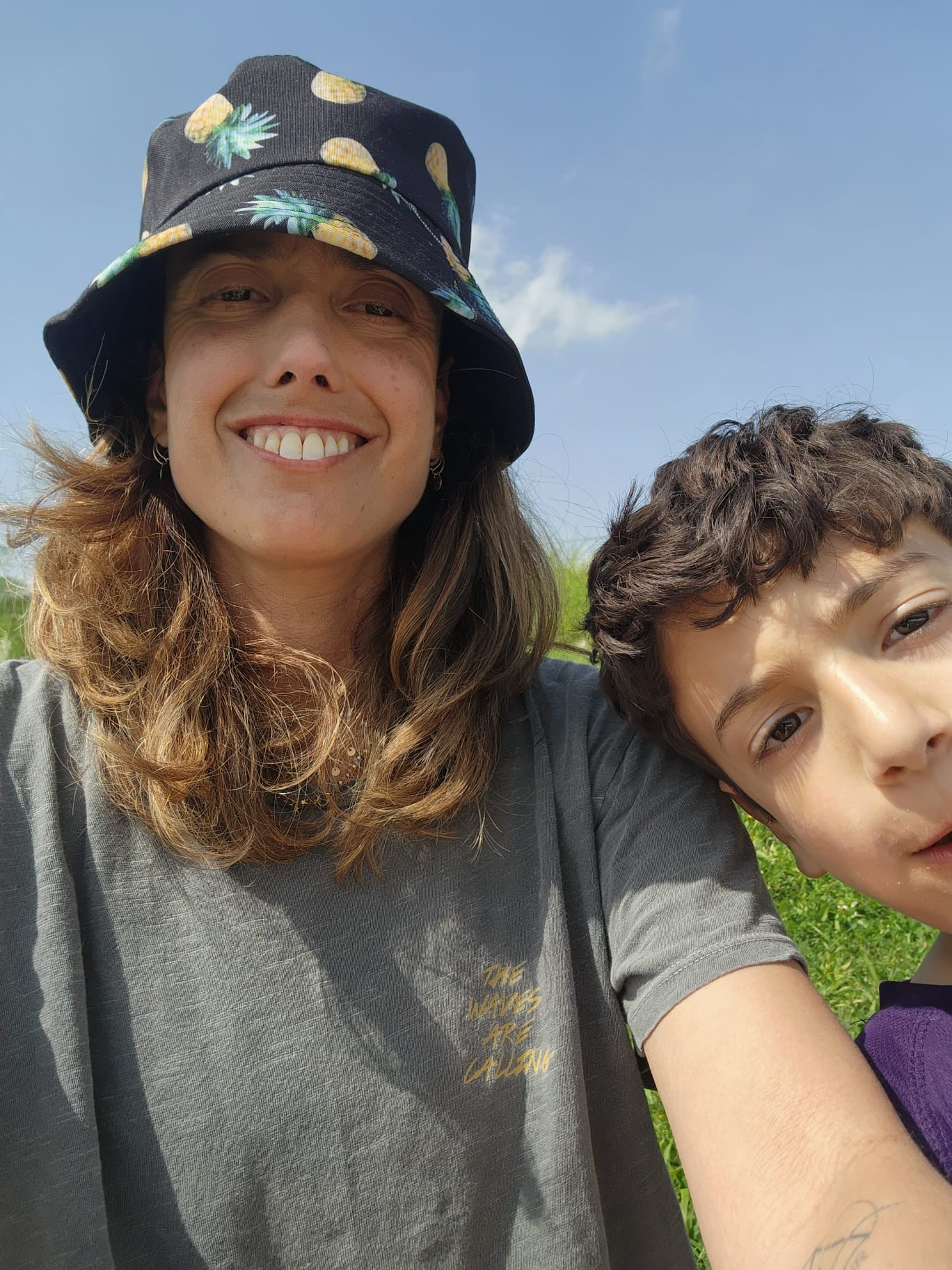
Within a short time I returned to normal life — to go out, to walk, to play with my child, to cook. Every small action felt like a gift.
A second child — in a way I didn't plan
After the transplant, I felt the desire to expand our family. But pregnancy after a lung transplant carries high risks. My doctors strongly advised against taking that risk.
So we opened a different path: surrogacy. The process was not easy — neither emotionally nor financially. But in July 2023 my second child was born.
To sit and hold him in my arms — it was the moment when I understood that life had won. That all the battles, all the fears, all the days of waiting — were worth that moment.
Giving back to the community — Transplant Mentors
Today, looking back, I want the people who are where I was — on the waiting list, in fear, in doubt — to know: there is life after transplant. Not just survival — a full life.
That's why I chose to join the "Transplant Mentors" program of the Linshom association — and to be the mentor I wish I had. I talk with transplant candidates, tell them about my experience, answer questions — and most importantly I say: "I'm living proof that this is possible."
This community — people who understand, who have been through it, who can hold your hand — changed my life. Mine and many others'.
"I can't change the path I went through. But I hope that whoever is diagnosed today will have more options. More time to live the life they want. Not just to survive – but truly to live."
Looking back, without regret
Today, after the transplant, I look forward, but also back. Not with regret, but with hope.
Hope that young people diagnosed today will meet a different reality: more treatment options, more effective treatments with fewer side effects, that make it possible to live better and to delay the progression of the disease as much as possible.
"The right to live a family life, to love and be loved, to live many more years — is worth all the hardship along the way!"
— Roni Nir