









"Don't underestimate the disease, and remember you are not alone."
Read the full storyThe Complete Guide
Breathe without thinking about it
Most people with asthma can reach a point where the disease barely shapes their day. Here we have mapped out the way there: from the first symptoms and diagnosis, through tailoring treatment, to a routine that lasts. For parents of children who have been diagnosed, too.
What happens in the airways in asthma, which symptoms appear, and what control and long-term treatment mean.
How biological predisposition and environmental exposures combine in the development of asthma, and the difference between a cause and a trigger.
What really runs in families, how much family history affects risk, and why heredity is not destiny.
The link between asthma, allergic rhinitis and eczema, and what the atopic tendency means in practice for treatment.
How many people live with asthma in Israel and worldwide, and what the gap between diagnosis, treatment and hospitalizations tells us.
Why asthma can appear in your twenties and thirties, and what you need to know about treatment, follow-up and daily life.
What to expect in the first months after diagnosis, when the response to treatment is checked, and what to keep track of until the follow-up visit.
Which symptoms and patterns raise suspicion of asthma, and which warning signs mean you should seek help sooner.
How asthma is actually diagnosed, which tests are needed, and why one normal test does not always rule it out.
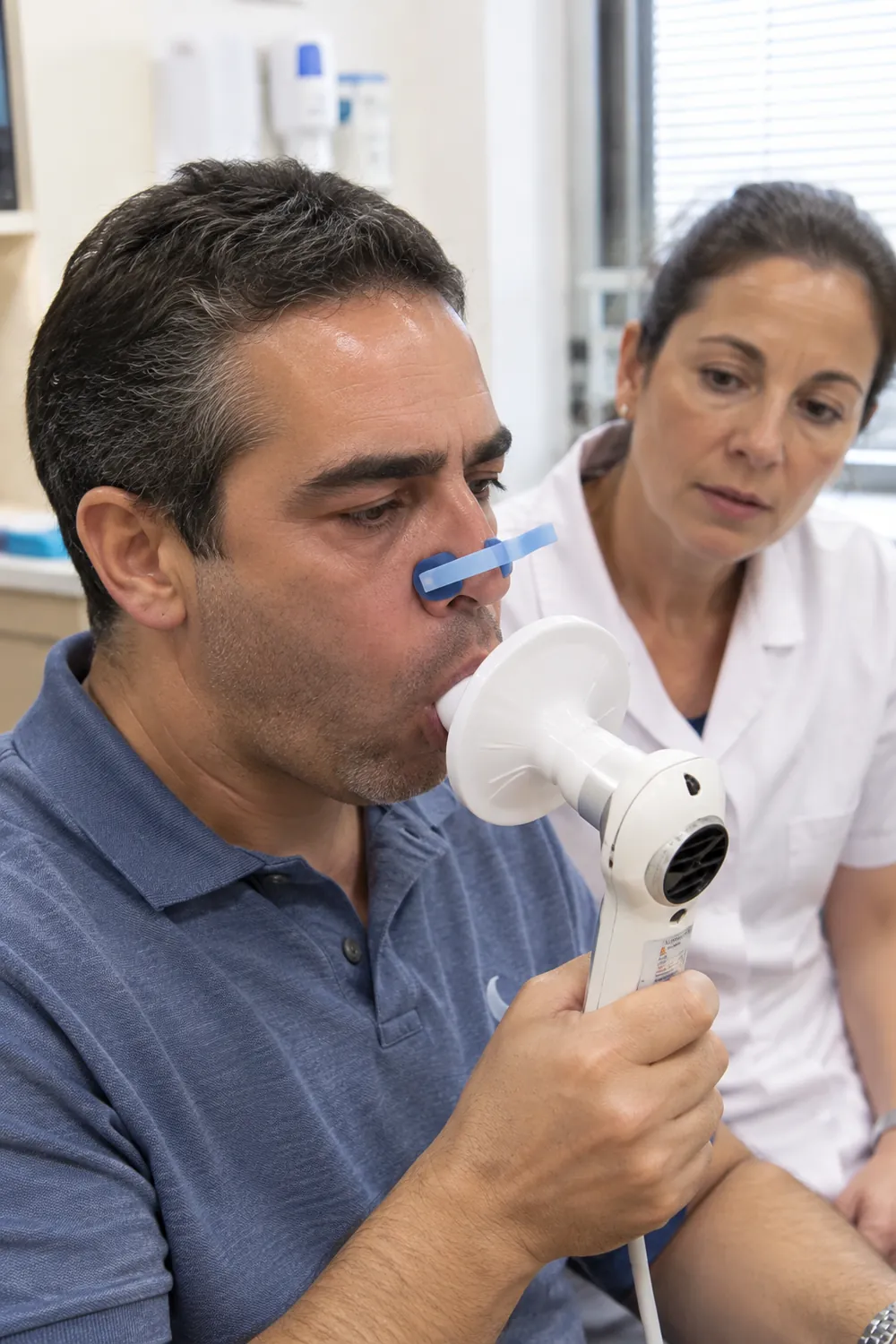
How spirometry is performed, what it measures, and which additional tests help when the result does not give an answer.
Which conditions can look like asthma, and how the workup continues when symptoms or tests do not fit.
When a lingering cough can be the only sign of asthma, and which tests help reach a diagnosis.
The difference between asthma and COPD, how they are told apart, and what to do when features of both are present.
Which types of asthma exist, how they are identified, and when the classification really changes the choice of treatment.
How asthma severity is determined, why it differs from the treatment step, and why it can only be judged over time.
How allergic asthma is identified, which tests help, and what to know about allergens and how they are managed.
What eosinophils and type 2 inflammation are, how they are identified, and how they guide the choice of advanced treatment.
The difference between severe asthma and asthma that is hard to control, and which treatment options open up after a thorough workup.
Which medicines are used to treat asthma, the difference between preventer and reliever medicines, and how treatment pathways are built.
How an inhaled steroid works, how it differs from oral steroids, and what is known about side effects.
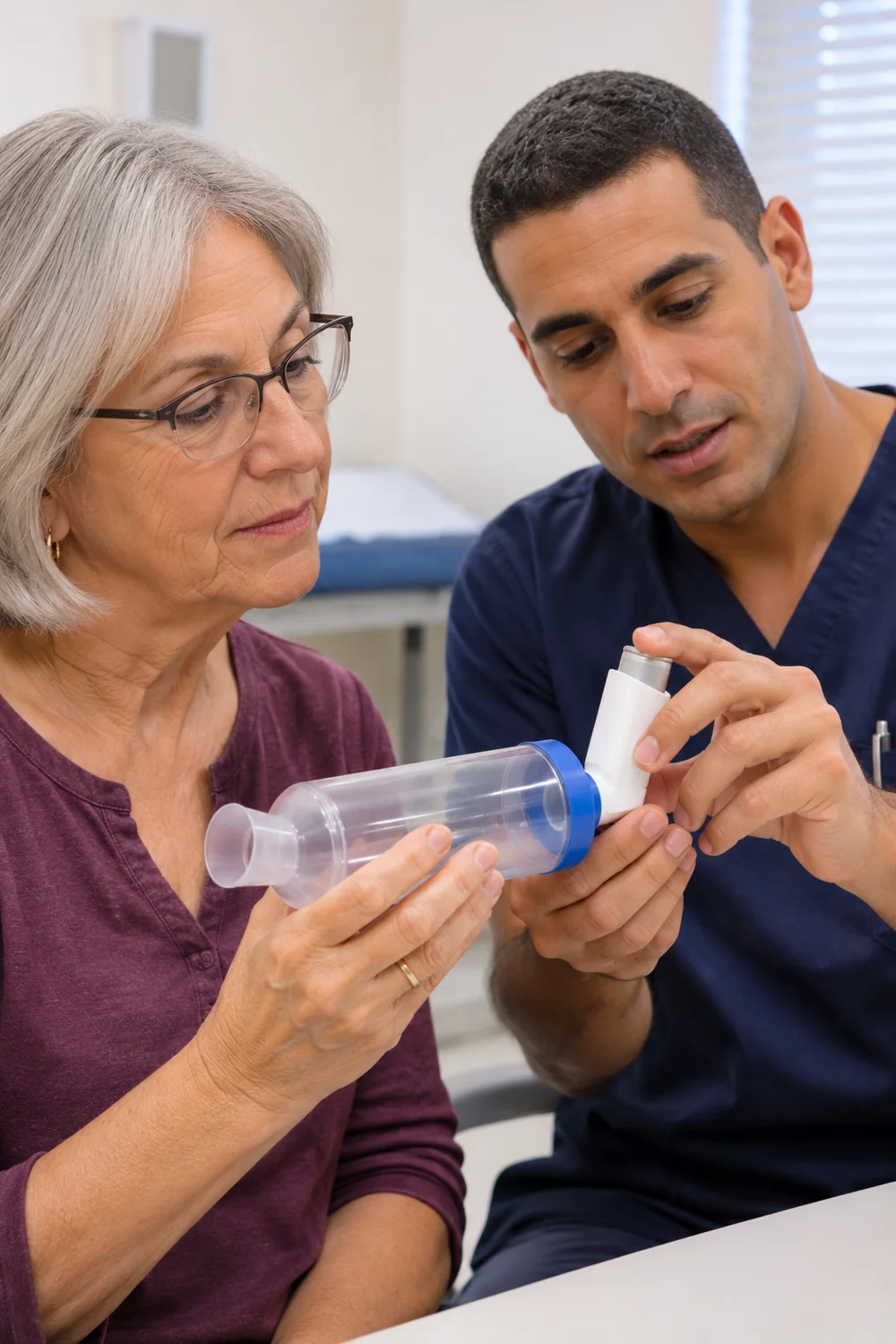
The differences between inhaler types, how to use each one correctly, and why inhalation technique matters so much.
When a nebulizer is really necessary, when an inhaler with a spacer is enough, and how to use and clean the device.
What a personal asthma action plan looks like, what it should include, and when it helps you act without guessing.
Who biologic treatment is suitable for, how to choose between the options, and what to know about eligibility, follow-up and injections.
What patients with severe asthma said about the road to biologic treatment, the waiting, the support and the information they received.
How to recognize an asthma attack, what to do in the first moments, and when to call for urgent medical help.
How to know whether your asthma is controlled, which four questions to ask yourself, and what to do when the answers point to a problem.
When the family doctor is enough, when to involve a pulmonologist or allergist, and when the referral should not wait.
How often to come for follow-up, and what determines whether the next visit should be sooner or can wait longer.
What information to bring to the visit so the doctor better understands your symptoms, treatment and flare-ups.
Which questions to prepare in advance for diagnosis, follow-up and treatment, so you leave the visit with clear answers.
Which rights people with asthma in Israel may have, and the differences between the various tracks and criteria.
How to identify triggers that worsen asthma, what can be reduced, and why avoiding triggers does not replace treatment.
What is really worth changing at home and outside, and what matters less when you are trying to keep your asthma controlled.
How to exercise with asthma, what to do when exertion brings on symptoms, and when to review the treatment.
Why asthma can worsen at night, what night-time waking tells you, and which other factors are worth checking.
How stress, anxiety and depression relate to asthma, and how both are treated without putting symptoms down to psychological causes alone.
What smoking, vaping, exercise, weight and vaccines change in asthma, and what role medication still plays.
Why people avoid using an inhaler near others, and how stigma can affect the treatment itself.
What changes in asthma during pregnancy, why treatment should be continued, and what follow-up looks like during this period.
Why wheezing in early childhood is not always asthma, how children are diagnosed, and what differs in treatment up to age six.
How to recognize respiratory distress in children by age, which signs matter more than the numbers, and when to go to the ER.
How to use a spacer and mask with a small child, and what to do when they cry, resist or turn their head.
What is known about the effect of inhaled steroids on growth, how large the effect is, and how to monitor without stopping treatment.
What preschool and school staff need to know, which documents are required, and how to prepare for trips and emergencies.
What is truly in parents' control, what is not their responsibility, and which steps can help a child live with asthma.
How to recognize an attack in a child, what to coordinate with preschool or school, how to teach a child to use an inhaler, and how to keep a routine as normal as possible.
Read the guideWho biologic treatment is suitable for, how to choose between the options, and what to know about eligibility, follow-up and injections.
The four questions that determine whether asthma is controlled according to GINA, the signs that asthma is no longer controlled, and the readings worth bringing to your doctor's visit.
What patients with severe asthma said about the road to biologic treatment, the waiting, the support and the information they received.
Asthma is a chronic disease with no cure at present, but it can be very well controlled. With tailored treatment most people with asthma live completely full lives: they work, exercise and sleep well, without significant limitations.
No. Asthma often begins in childhood, but it can appear at any age, including after age 50. Asthma that starts in adulthood tends to be harder to control, so it is important not to attribute breathing symptoms to "age" without a workup.
Not on your own. Feeling well is usually the result of the treatment. Stopping on your own is one of the most common causes of attacks. Doses are reduced gradually, under your treating doctor's guidance, after a period of stable control.
Yes, and physical activity is even recommended: it improves breathing endurance and quality of life. If exertion brings on symptoms, it is usually a sign that control is not good enough and the treatment should be updated. Many Olympic athletes live with asthma.
When the reliever inhaler does not help, when it is hard to speak a full sentence, when lips or nails turn blue, or when symptoms worsen quickly. In such situations call an ambulance: do not wait and do not drive yourself.
Pollen, house dust mites, animals, air pollution and cigarette smoke, viral infections, cold dry weather, strong smells, physical exertion and emotional stress. Everyone has a personal combination, and identifying it is a key step in controlling the disease.
Medicines that target the patient's specific inflammatory mechanism, mainly in severe asthma that is not controlled despite full inhaler treatment. Suitability is determined by blood tests and inflammation markers, by a pulmonologist's decision.
In about a third of women the disease worsens, in a third it improves and in a third it stays the same. It is important to know that stopping treatment in pregnancy is more dangerous than continuing it: uncontrolled asthma harms the oxygen supply to the fetus.
A yearly flu vaccine, a COVID-19 vaccine according to current recommendations, and in some cases a pneumococcal vaccine as well. Respiratory infections are among the most common causes of attacks and hospitalizations.
Sit them upright (not lying down), help them use the reliever inhaler, stay calm and stay by their side. If there is no relief within a few minutes or the situation worsens, call an ambulance immediately.
People with asthma and family members share their journey, from diagnosis to the routine that came back.
"Don't underestimate the disease, and remember you are not alone."
Read the full storyJoin the Linshom association's community: people with asthma, family members and professionals who share knowledge, experience and support.